Work
In our projects we design concrete yet bold solutions that are vehicles for social change. We work in a wide range of domains, from mental health to restoring biodiversity and everything in between.

Reframing Studio is an independent innovation agency with over 25 years of experience.
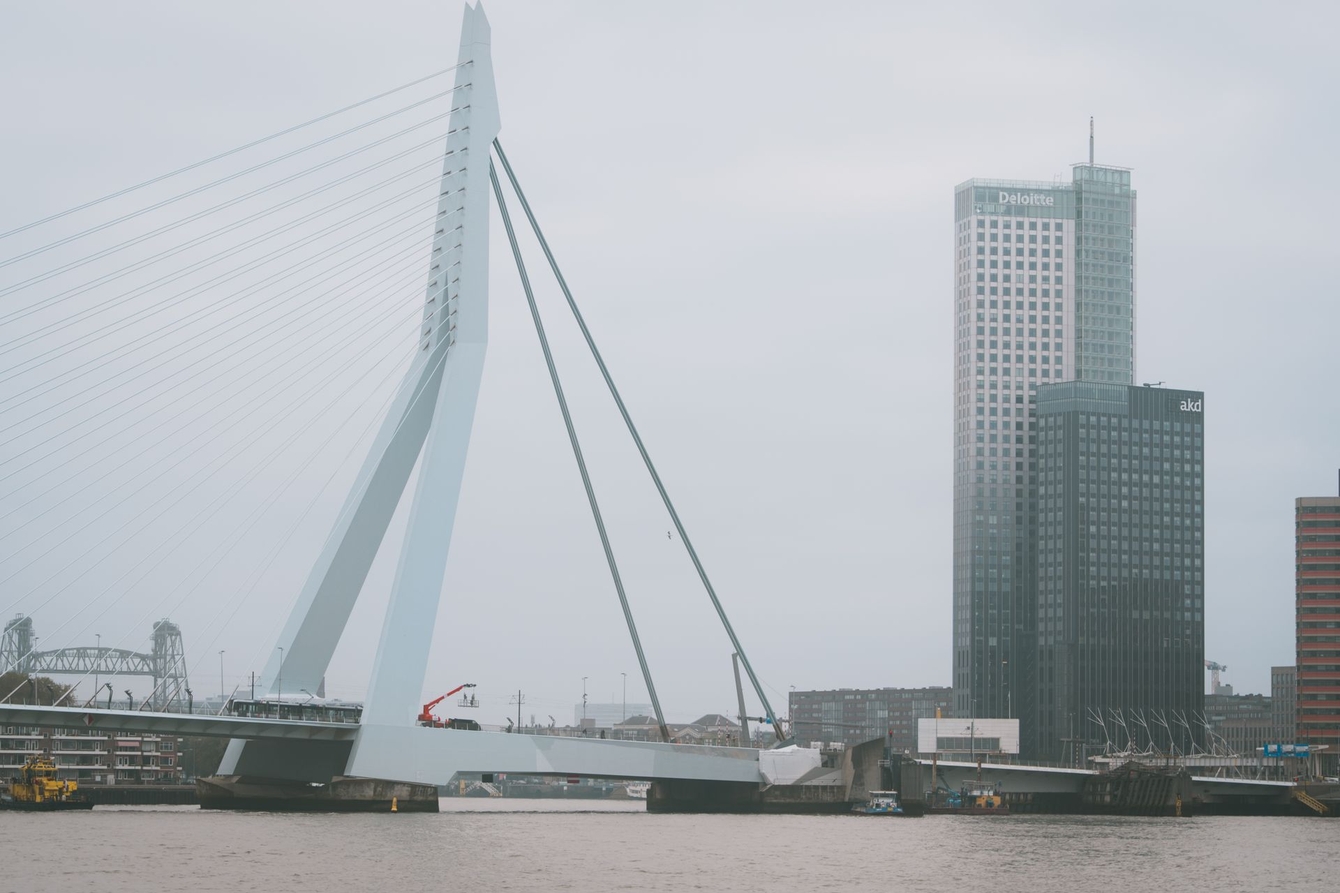
Gemeente Rotterdam
How do the technical experts of the Gemeente Rotterdam relate to the future of the city?
The team Stedelijke Opgaven en Infrastructuren (SO&I) - roughly translated to Urban tasks and Infrastructure Team - is a collective of technical specialists within the Engineering Office of the Municipality of Rotterdam. Individually, its members work across a wide range of projects in the city, each with their own expertise and experience. Collectively, however, there are many different opinions about the role and function SO&I should have, coming both from outside the team and from within.
In Rotterdam, technical expertise operates at the intersection of political decision-making, physical infrastructure and everyday life of the citizens. How this expertise is organised matters as much as the expertise itself. Reframing Studio and the SO&I team joined forces to design a clear, cohesive and future-proof vision of the team’s significance, both within the municipal organization and in its relationship to the city of Rotterdam.
The team is often described as 'the technical conscience of the city’. But what does that actually mean in practice? Is this a role the team recognises itself in, or even aspires to? And which stories, wishes, needs, interests and values shape their expertise as the city continues to change?
Team
Beatrijs Voorneman
Costanza Milano
Mathijs van Dijk
Partners
Gemeente Rotterdam
Challenge
To better serve both the municipality and Rotterdam itself, the team wanted to redefine its collective identity in light of the city’s changing urban challenges. At the same time, there was a clear internal need to create a way of working that acknowledged individual motivations, expertise, and long-term commitment to the work.
The challenge was organisational in nature: how could a fragmented group of highly specialised experts become a recognisable collective, able to engage with the city at different moments and levels?
In this project, we guided the team step by step through the Reframing Method, treating the team itself as a design question. By rethinking the team and redesigning it from a future perspective, we explored how the roles, relationships and ways of working could be redefined to better support both the organisation and the people within it.
The SO&I team was set on finding new ways of interaction with the city and the organisation to make sure their expertise is recognised, understood and integrated at the right moment.
Insights
Over the course of three seasons, the team participated in four creative sessions, moving from exploring future developments to defining concrete directions for change. This created space to step back from everyday projects and look at the broader context in which their work operates.
One insight proved particularly crucial. Technical innovation in the city often arrives at the wrong moment: a little too early or a little too late. In some cases, ideas are introduced before their relevance is recognised or understood, resulting in projects stalling as nobody understands them, or never being implemented at all. And in other cases, technical expertise is only brought in once problems have already escalated, leaving little room for anything beyond short-term, reactive solutions.
These two opposite situations describe the timings of technical innovation in the city and became especially clear when the team looked at how their expertise interacts with the city in practice at different layers: in political discussions, during implementation in the street, and when changes are felt by citizens. Each of these levels asks for a different timing and way of working.
Because the team lacked a shared way of positioning itself across these situations, expertise was often deployed on an ad-hoc basis. Individual experts were involved at different moments and for different reasons, but rarely as part of a deliberate collective approach. As a result, innovation risked either remaining abstract and unimplemented, or lagging behind urgent realities.
What surfaced was not a lack of technical knowledge, but a question of organisational design: how a team of experts positions itself, takes responsibility, and ensures its expertise can be recognised and integrated at the right moment within a complex and layered city.
Design
The project resulted in the design of six future roles for the SO&I team. Each role represented a distinct way of working and a different relationship to both the city and the municipal organisation, with a distinct mission and set of tools.
From these six roles, the team selected three to develop further. In addition, they generated a set of structural adjustments and recurring activities designed to continue nurturing learning, reflection and long-term collaboration over time.
At Reframing Studio, we approach projects like this as questions of organisational design. We work side by side with teams to rethink new roles, responsibilities, and ways of working from a future perspective, designed to make real sense to the context they operate in and to add genuine value to the collective. Our approach goes beyond restructuring; we focus on co-creating environments where organisations can operate meaningfully, for the people doing the work and for the society they serve, in this case, the city of Rotterdam.

Reframing Studio is an independent innovation agency with over 25 years of experience.
